For many people, migraine begins not with pain, but with the room tilting, spinning, or slipping away.
Vertigo, dizziness, and feeling off‑balance are incredibly common, especially in people who experience migraine with aura, and newer research confirms these symptoms are real, measurable, and often under‑treated.
Doctors use the term “vestibular migraine” when vertigo or dizziness is directly related to migraine, with or without aura. Recognizing vestibular migraine matters, because it connects the dots between your head pain, visual changes, and those frightening spinning or rocking sensations—and it opens the door to better diagnosis and prevention.
How Common Is Migraine‑Related Vertigo?
According to a 2025 systematic review, over the last decade, several large studies and reviews have tried to answer a simple question: how many people with dizziness actually have a migraine‑related problem? The answer: more than we used to think.
- Population studies now estimate that vestibular migraine affects about 1–3% of adults, making it one of the most common causes of recurrent vertigo.
- In dizziness and neurology clinics, 7–16% of patients meet criteria for vestibular migraine.
- Among people who already have migraine, roughly 10–21% have vestibular migraine or a strong migraine–vertigo link.
A 2020 systematic review in *Frontiers in Genetics* also found that vestibular migraine tends to run in families: the risk is roughly 4–10 times higher in relatives of affected patients than in the general population. That supports what many patients already know from experience—migraine and migraine‑related vertigo often cluster in families.
Aura, Balance, and Falls: Why Dizziness Is Not “All in Your Head”
Migraine with aura (MwA) includes temporary neurologic symptoms—most often visual changes—before or during the attack. A 2024 study of over 200 adults with aura confirmed that nearly all had visual aura, while about one third had numbness or tingling and a smaller group had speech or language symptoms.
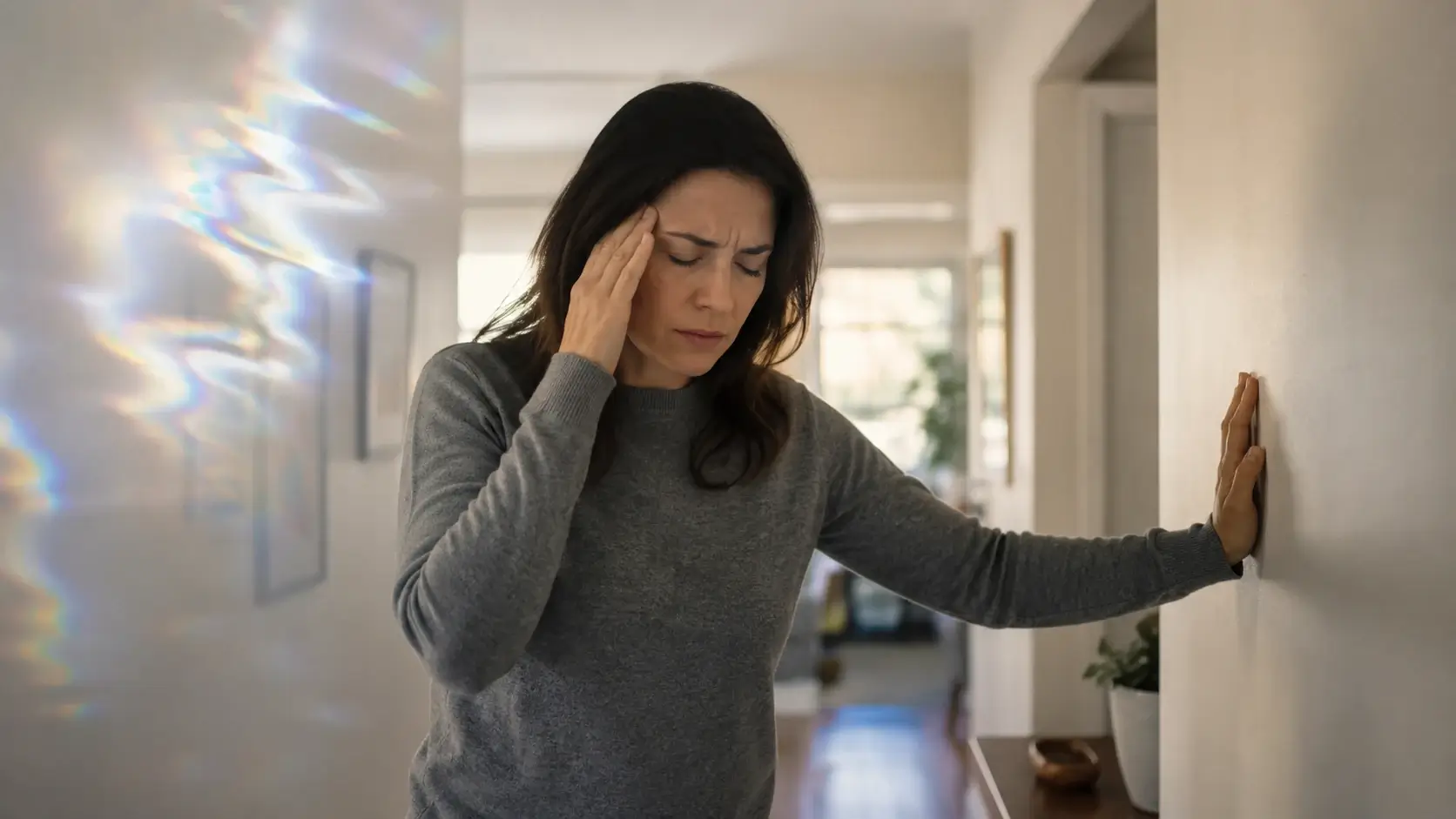
More recent work has gone a step further and asked: what does aura do to balance and movement? A 2021 study titled “Migraine With Aura Is Related to Delayed Motor Control Reaction and Postural Instability” used computerized balance testing to compare people with migraine with aura, migraine without aura, chronic migraine, and healthy volunteers. The migraine with aura group had:
- Greater body sway during standing tests.
- Slower automatic responses when the support surface suddenly shifted.
- More reported falls over the previous year compared with the other groups.
In other words, aura is linked to real changes in postural control, not just a vague sense of being “off.” Earlier work using balance and mobility tests has also shown that people with migraine—especially with aura—are more likely to have dizziness, unsteadiness, and mobility problems than those without migraine.
For patients, this means that recurrent dizziness, near‑falls, or unexplained falls deserve serious attention, particularly if you also have migraine with aura. For clinicians, it’s a reminder to ask specifically about aura, balance confidence, and falls when evaluating migraine patients.
What Vestibular Migraine Feels Like
Vestibular migraine can look a little different from one person to the next, but several patterns show up over and over in studies and clinical reports.
Common features include:
- Recurrent vertigo or a strong rocking / swaying sensation lasting from minutes to hours and occasionally days.
- Dizziness triggered by head movement or position changes, which can be mistaken for benign paroxysmal positional vertigo (BPPV).
- Sensitivity to light, sound, or motion, nausea, and sometimes classic throbbing head pain—though some attacks occur without headache.
- A history of migraine with or without aura, often starting years before the first vestibular symptoms.
Because vertigo attacks do not always arrive with a “typical migraine headache,” many patients are told their dizzy spells are due to anxiety, inner ear crystals, or aging alone. That delay in getting the right diagnosis can make people feel dismissed and powerless.
How Doctors Diagnose Vestibular Migraine Today
There is no single blood test or MRI scan for vestibular migraine. Diagnosis is based on your story, your migraine history, and the pattern of your vestibular symptoms. Updated criteria from headache and neuro‑otology societies generally include:
- At least five episodes of moderate to severe vestibular symptoms (spinning, rocking, motion‑induced dizziness with nausea, or visually induced vertigo) lasting 5 minutes to 72 hours.
- A current or past history of migraine with or without aura.
- At least half of vestibular attacks accompanied by migraine features such as typical migraine headache, light and sound sensitivity, or visual aura.
- No better diagnosis to explain the symptoms, after ruling out inner ear and central nervous system causes.
Other conditions that may coexist or be confused with vestibular migraine include BPPV, Ménière’s disease, persistent postural‑perceptual dizziness (PPPD), anxiety‑related dizziness, and stroke or demyelinating disease. A careful evaluation by a neurologist or neuro‑otologist familiar with migraine is often the most efficient path to clarity.
Treatment: Calming the Brain, Protecting Your Balance
Vestibular migraine treatment is built on the same three pillars as other migraine care: lifestyle, prevention, and rescue.
1. Lifestyle and trigger management
Regular sleep, balanced meals, adequate hydration, stress reduction, and gentle but consistent activity all help stabilize the nervous system. For many people, specific triggers like visual overload, strong odors, certain foods, or hormonal shifts can also play a role. Tracking patterns over time can clarify what is worth modifying—and what is not.
2. Preventive therapies
Several standard migraine preventives (beta‑blockers, calcium channel blockers, topiramate, tricyclic antidepressants, and others) have been reported to reduce the frequency and intensity of vertigo attacks in vestibular migraine, though large randomized trials are still limited. Newer CGRP‑targeting therapies and neuromodulation devices are being studied and may offer additional options as evidence grows.
There is also meaningful clinical evidence — including studies specifically on vestibular migraine patients — supporting the use of magnesium and high-dose riboflavin (B2) for addressing vertigo, dizziness, and related vestibular symptoms.
Why These Nutrients Help
The science behind these supplements centers on mitochondrial and neurological mechanisms:
Magnesium: People with migraines — including vestibular migraine — often have measurably lower levels of magnesium in the brain and spinal fluid. Magnesium helps by stabilizing nerve cell membranes, reducing brain excitability (cortical spreading depression), and lowering neuroinflammation.
Riboflavin (B2): Migraineurs are frequently B2-deficient; supplementation enhances mitochondrial energy production, which is often impaired in migraine-prone individuals.
3. Acute treatments and vestibular rehab
During an attack, some patients respond to migraine‑specific medications (like triptans), NSAIDs, and anti‑nausea medicines, but data specific to vestibular migraine remain early. Between attacks, vestibular rehabilitation therapy—specialized physical therapy that retrains balance and head‑eye coordination—can improve confidence and reduce motion sensitivity, particularly in those with documented postural instability or a history of falls.
Alongside medications, many people look for natural strategies that support brain and vascular health over time. Nutrients such as magnesium, riboflavin (vitamin B2), and feverfew have been studied for their benefits to migraine patients and are often used to complement lifestyle changes and medical care.
Any new regimen, whether pharmaceutical or natural, should be discussed with your healthcare provider—especially if you have other medical conditions or take daily medications.
The Takeaway
The most important message from newer research is simple: migraine-related dizziness and aura symptoms are real, common, and treatable. Understanding the connection between migraine, balance, and the nervous system gives patients and clinicians a clearer path forward. With the right combination of medical guidance, healthy lifestyle habits, and supportive preventive strategies, many people can reduce both migraine attacks and the fear and disruption that dizziness can bring to everyday life.
To the Best of Health,
Curt Hendrix, MS., CCN, CNS.